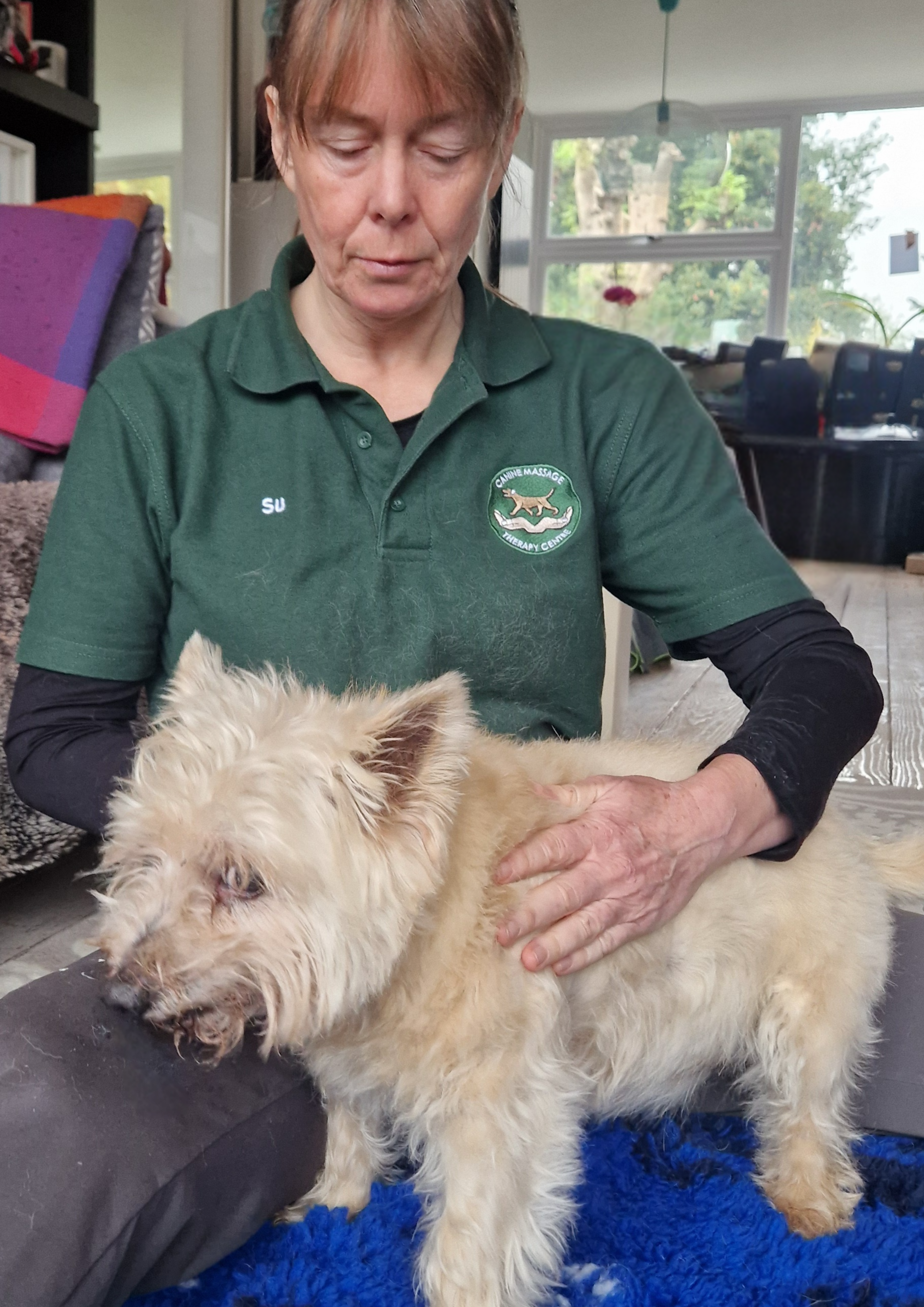
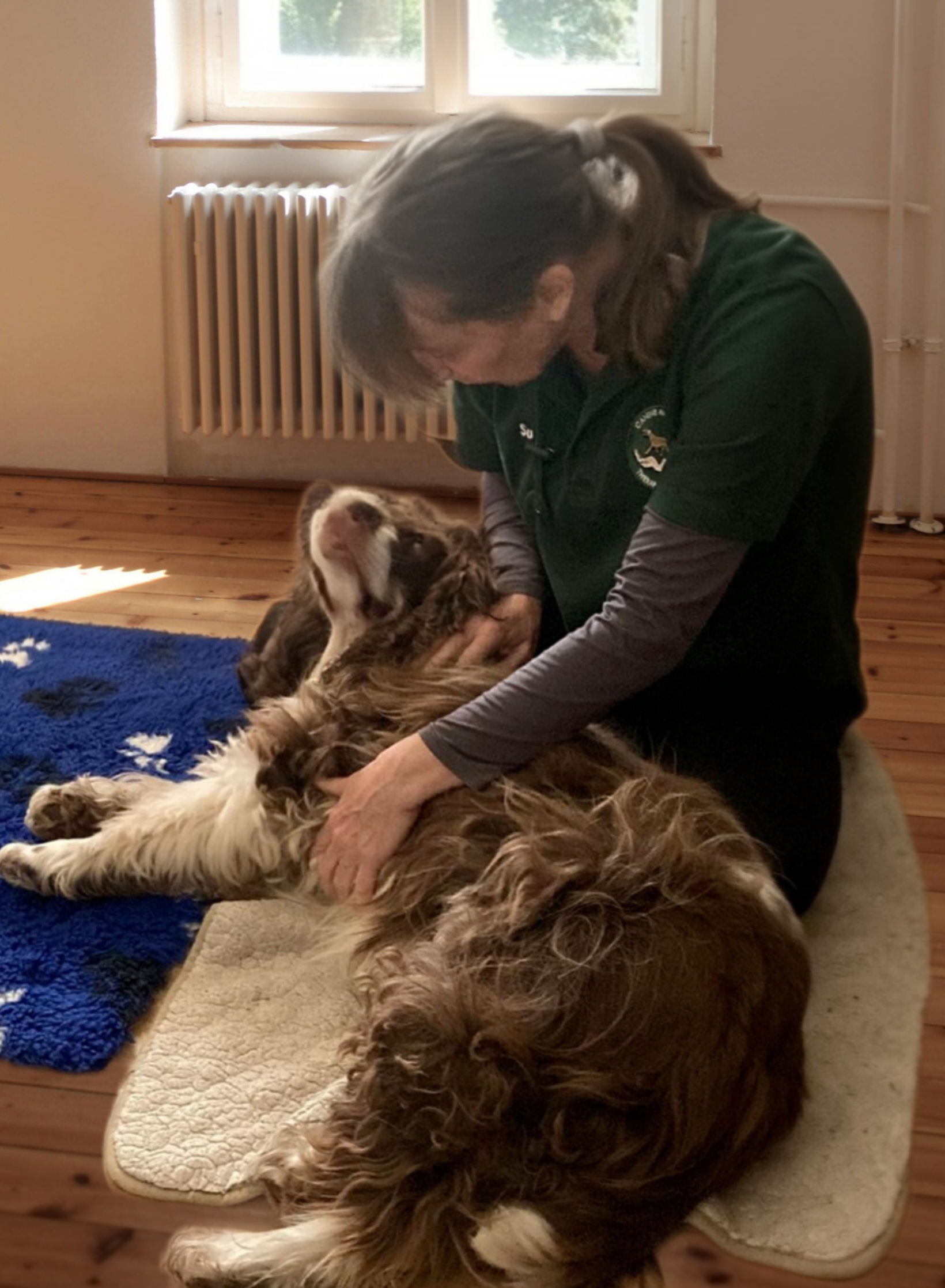
If you have seen your dog limping, observed any gait irregularity, or noticed that they are having difficulty with any number of ordinary daily activities such as going up or down the stairs, climbing onto chairs or the sofa, getting in and out of the car, or just more generally slowing down, then your dog will benefit from Clinical Massage therapy.
Massage can help by:
- identification and rehabilitation of muscular injury and soft tissue conditions successfully, usually within 1-3 treatments
- provision of pain management for orthopaedic issues such as arthritis, hip/elbow dysplasia, luxating patella and spondylosis
- removal of trigger points and spasms to normalise muscular function and activity
- support for senior dogs and those who appear to be slowing down
- improvement in gait and posture
- aiding pain management for dogs intolerant to non-steroidal anti-inflammatory drugs (NSAIDs)
- enhancement of the performance of sporting and agility dogs
- improvement of the dog’s ability to be examined/handled/groomed by addressing myofascial dysfunction
What is your dog trying to tell you?
The five categories described below, known as the Five Principles of Pain, provide a useful aid for identifying symptoms of musculoskeletal issues in your dog that could be helped by Clinical Canine Massage therapy.
Looking at changes in Posture, Gait, Behaviour, Daily Activities and Performance can help you to describe any symptoms to your vet that apply to your dog. Together, you can discuss your dog’s suitability for massage therapy as part of their individual healthcare, rehabilitation, pain management or wellness plan.

